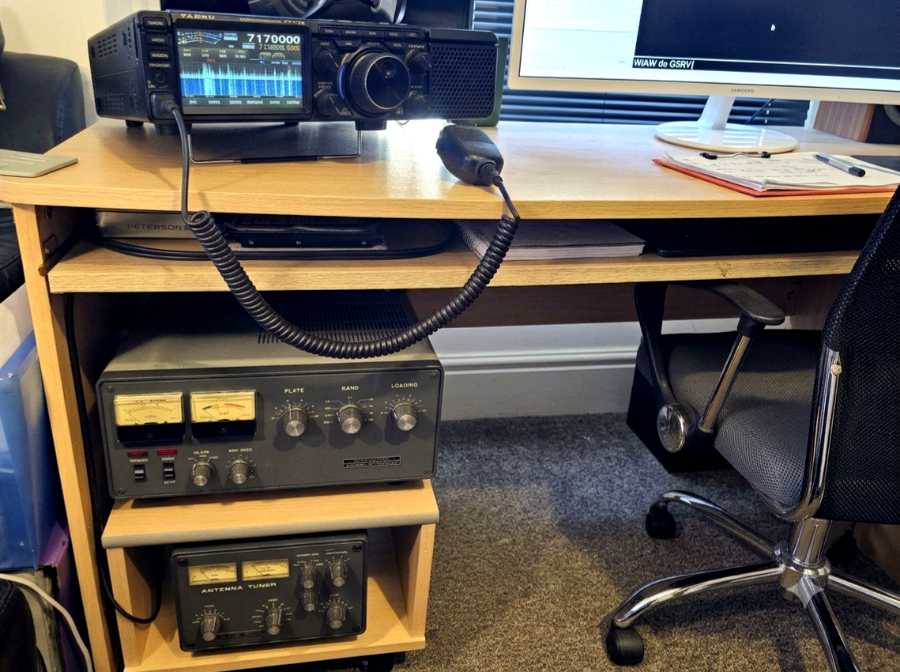
While making contacts on the amateur bands, I often found myself in situations where I could hear a distant station very well, sometimes even at 58 or 59, but simply couldn’t get through. Most of the time, the problem was a pile-up. I could hear the DX station perfectly, they were answering one caller after another, but my 80 or 100 watts just disappeared into the crowd.
Eventually, I started thinking about buying an amplifier. When I saw the prices of new ones, though, I quickly lost enthusiasm. Sometimes I get the impression that amateur radio equipment comes with a special tax simply because it is labelled “radio amateur”. An RF amplifier doesn’t seem like something that should cost several times more than a decent audio amplifier, yet the prices of new units can be astonishing.
So I started looking at the second-hand market and became increasingly interested in older valve amplifiers. One thing that did make me cautious was knowing that these devices contain lethal voltages of more than 2,000 volts. This is definitely not the sort of equipment to experiment with unless you know what you are doing and take proper precautions.
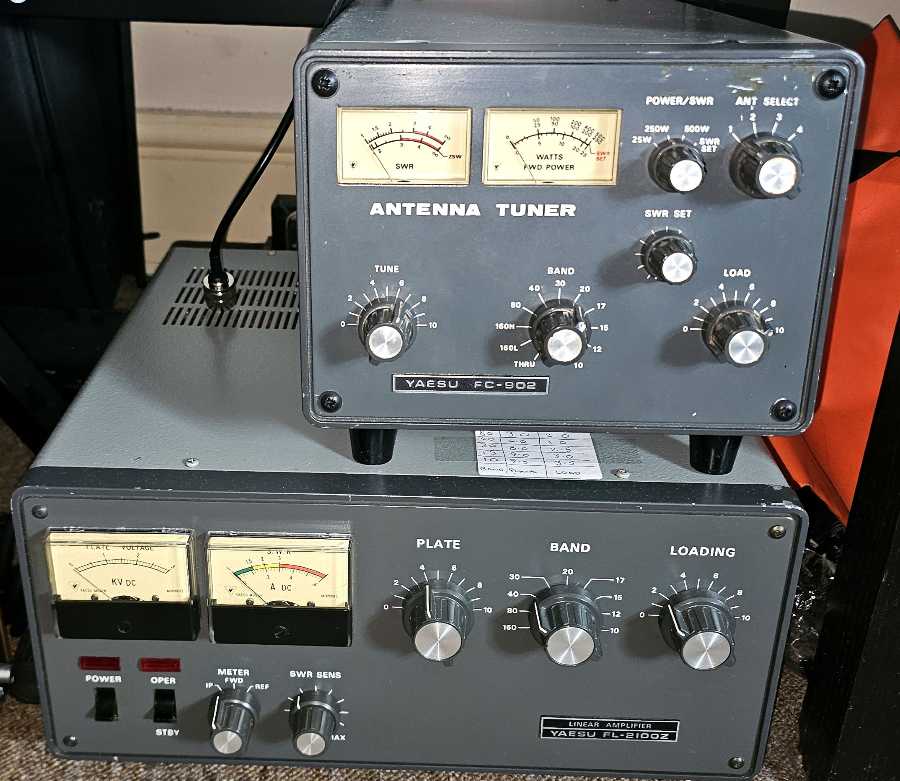
Eventually, I chose a Yaesu FL-2100Z. It is a classic valve amplifier that is now nearly half a century old. Used examples can be found from around £350, while well-maintained or refurbished units can sell for as much as £1,000.
I found one on eBay listed for around £770. It turned out that the seller specialised in repairing and selling amplifiers like this. The unit had been partially refurbished and the valves were said to be in very good condition. I managed to negotiate the price down to £700. I drove over, inspected the amplifier and came home with it.
There was still one problem, though. Connecting an old amplifier directly to a modern transceiver is not necessarily a good idea because the PTT circuit may operate at voltages that a modern radio might not appreciate. I therefore needed an interface to isolate the two devices.
Ready-made interfaces cost close to £100, so I decided there was little point paying that much for something relatively simple. My original plan was to build a circuit myself using an optocoupler and relay. Then I found a small board on eBay for about £5 which already contained both components and looked perfectly suitable.
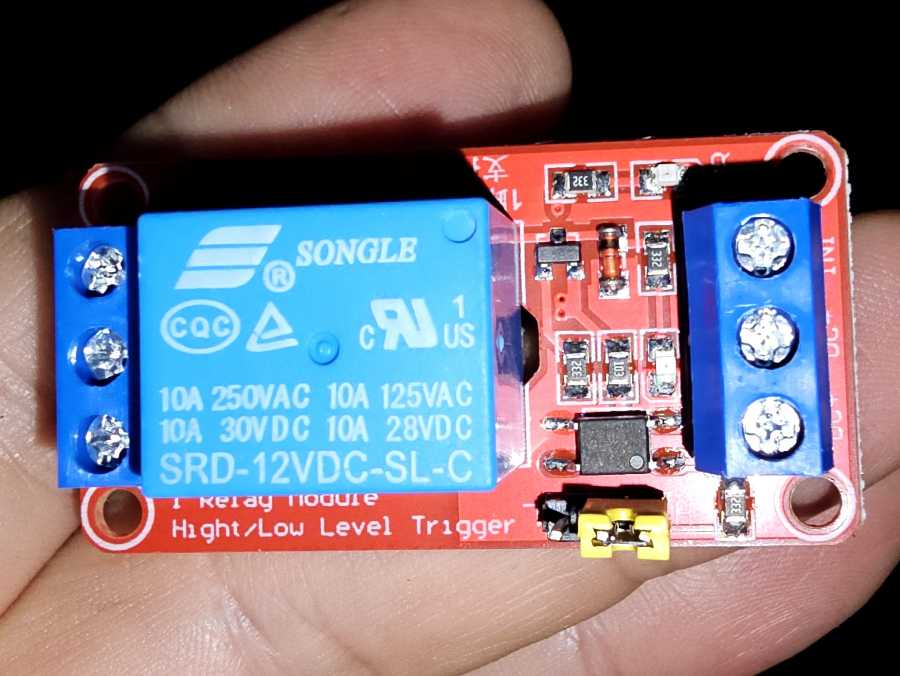
I ordered the board, an enclosure, cables and the necessary connectors. Once everything arrived, I assembled the interface. The most difficult part was soldering the eight-pin mini-DIN connector because the contacts are tiny and very close together.
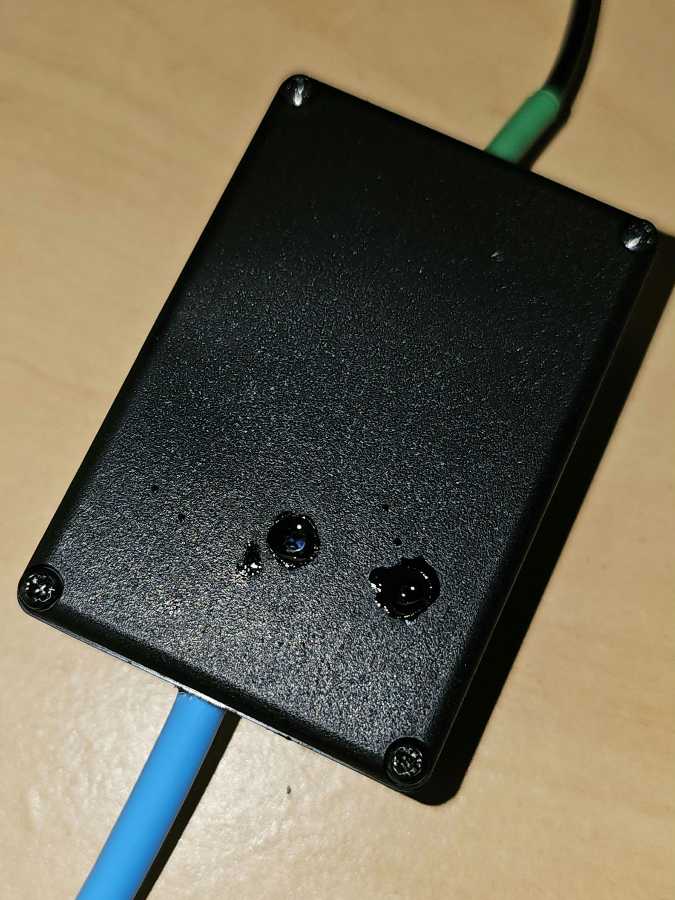
I first tested the completed interface separately using a power supply. Only after I was satisfied that everything behaved exactly as expected did I connect it between the radio and amplifier.
And it worked. My modern Yaesu can now control an almost fifty-year-old amplifier through an interface I built myself.
I also came up with the idea of building a small rack on wheels so I could pull the 20 kg amplifier out from under the desk whenever I was using it, giving it much better airflow. And believe me, that machine gets as hot as a small radiator when transmitting. A bit of DIY later, and the rack, built from reclaimed boards, was ready.
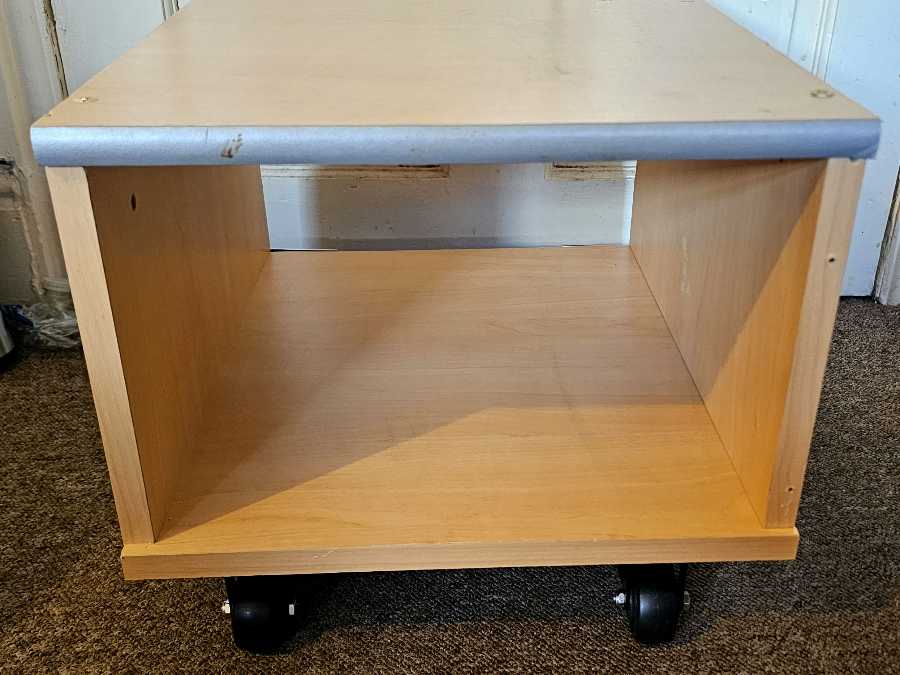
The next issue was the antenna. My dipole is well matched on 40 metres, but things are less ideal on the other bands. The radio has an automatic tuner, but the amplifier does not. So I bought a Yaesu FC-902 manual antenna tuner, another piece of equipment roughly fifty years old and a perfect match for the amplifier in terms of age. It is designed for around 500 watts and allows me to tune the antenna to practically 1:1 SWR. It cost me just £90.
It also gave me another unexpected benefit. I can finally use the 80-metre band. Without the tuner, my antenna has an SWR above 5:1 there, so the automatic tuners in my radios couldn’t cope with it. The old manual Yaesu handles it without difficulty.
Of course, the tuner doesn’t change the physical dimensions of the antenna and certainly doesn’t turn it into a perfect 80-metre dipole, but at least I can now operate normally on that band.
Once the tuner and amplifier were adjusted, it was time for a proper test. During poor propagation conditions, I heard a station in Germany calling CQ. I was receiving him at about 57. I replied without the amplifier. He could tell that someone was transmitting, but he couldn’t understand what I was saying.
I switched on the FL-2100Z. I set the radio to around 25 watts of drive power, which produced roughly 250 watts from the amplifier. Suddenly, my report at the other end improved to 58, occasionally reaching 59. He could now hear me perfectly well.
For me, that was the best possible test. Not a measurement into a dummy load and not watching the needle on a meter, but an ordinary radio contact where, moments earlier, I had been almost unreadable and then, after switching on the amplifier, my signal became completely usable.
For now, I don’t intend to increase the power any further. The choke in my antenna system is rated for around 300 watts, so I would rather stay safely within its limits. Once I replace it, I’ll be able to try higher power.
After that first test, though, I started wondering whether I’ll actually need any more.